NEW JOURNEY


Product Description
The 14S 36000mAh UAV Battery is a high-series-count option for an aircraft already designed around the relevant voltage window. It is not interchangeable with a large 6S pack merely because the stored energy is similar. The 36Ah capacity, body envelope and installed mass should be assessed together with controller limits and landing reserve. Current values derived from C-rates remain arithmetic references until validated for the complete assembly.
Technical Specifications
| Parameter | Specification |
|---|---|
| Reference configuration | 14S1P-36Ah |
| Product category | semi solid state lithium UAV battery |
| Configuration | 14S1P |
| Nominal voltage | 51.8V |
| Nominal capacity | 36000mAh / 36Ah |
| Nominal energy | 1864.8Wh |
| Cell energy-density reference | 350Wh/kg cell reference; confirm corresponding cell documentation |
| Pack weight | Approx. 5.6kg |
| Pack size (L x W x H) | 155 x 90 x 205mm |
| Discharge rate shown | 3C / 10C shown on product reference |
| Arithmetic current reference | 108A at 3C; 360A at 10C (arithmetic references only, not verified pack limits) |
| Power / balance interface | High-current power lead and balance interface shown; final mating connector and cable configuration confirmed for the approved order |
| Charging profile | Matched series-count charging; charge voltage/current and charger workflow confirmed for the final configuration |
Product Details

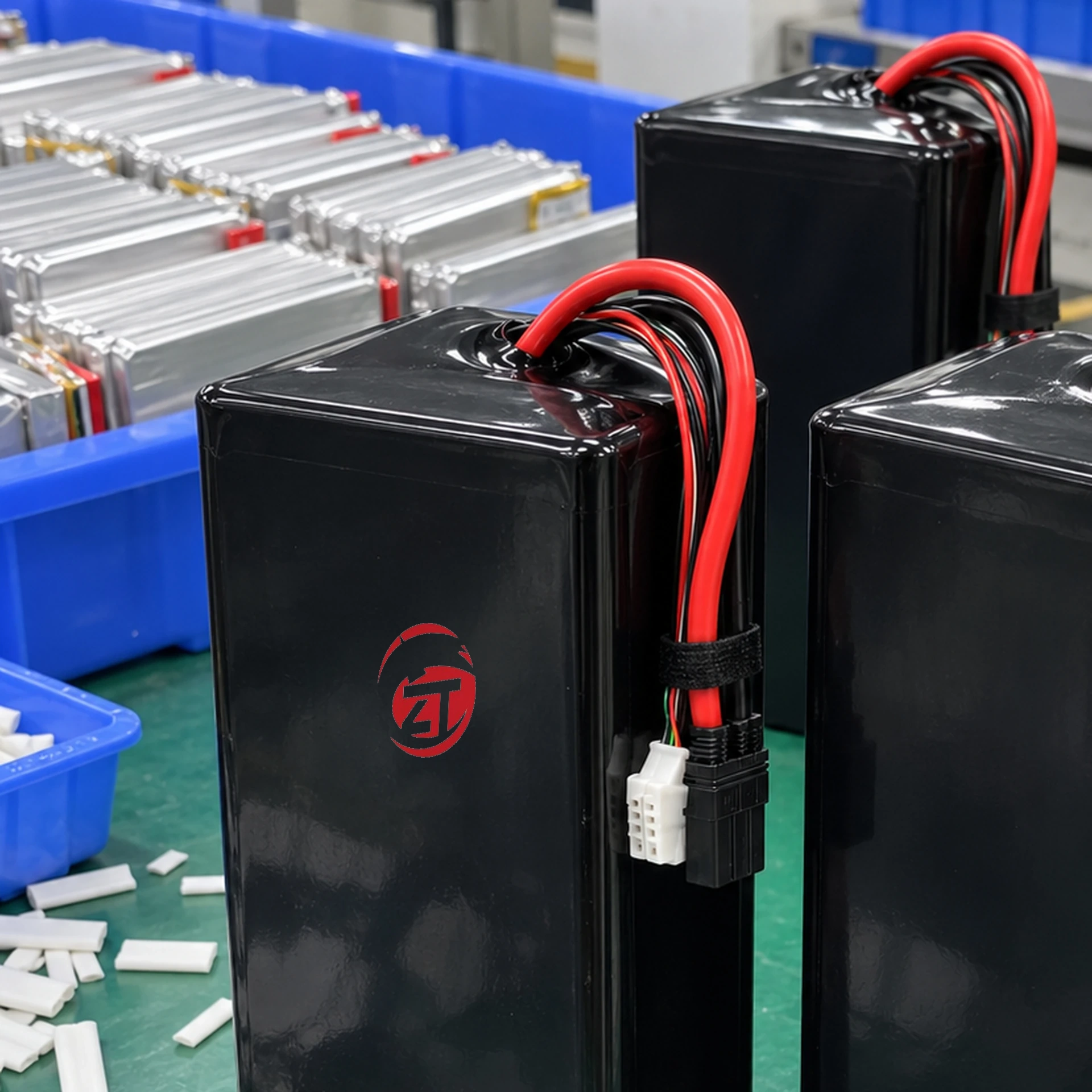
Mounting the 36Ah Body
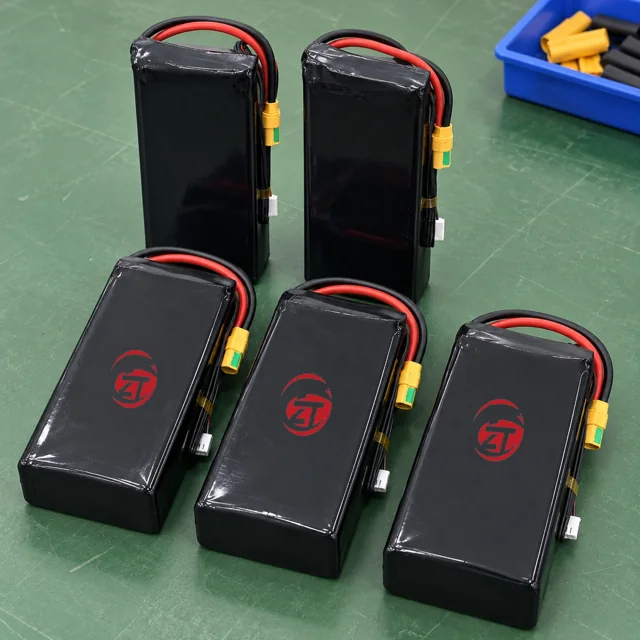
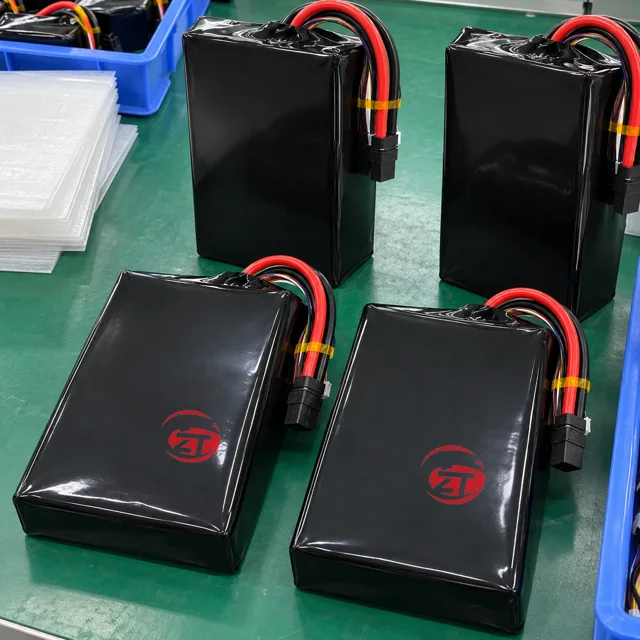
The 14S1P 36Ah UAV battery has a 155 x 90 x 205mm reference envelope and approximately 5.6kg mass. The mounting drawing needs additional space for cable bends, connector access and cushioning. Its body should be supported directly, with a removal path that does not pull on the power or balance leads.
Professional Aircraft Evaluation
This 14S configuration can be considered for inspection, mapping and other professional aircraft designed for its voltage window. The flight-current profile and landing reserve provide the basis for assessing the 1864.8Wh nominal energy. A similar energy figure in a different series-count battery does not establish electrical compatibility.
Energy Density Basis
The supplied product reference lists 350Wh/kg. In accordance with the supplier's cell-level clarification, this is a cell energy-density reference. Confirm the corresponding cell model, specification revision and measurement conditions with the quotation. The 1864.8Wh pack energy and approximately 5.6kg finished weight are separate aircraft integration inputs; neither establishes nor disproves the cell rating.
Verify architecture before sample comparison
A sample comparison should list series architecture and nominal voltage next to energy and mass. Keep the charger and aircraft limits with the same record. This avoids approving a candidate because its watt-hour figure resembles that of an electrically different pack.
Production and Handling Context

Discuss the Sample and Order
Send the current aircraft architecture, charger limits and bay drawing for a quotation. New Journey can review the 36Ah 14S configuration on its own electrical and mechanical basis.
Compare 14S 36000mAh UAV Battery with related models
| Selection point | 14S 36000mAh UAV Battery | 14S 105Ah UAV Battery | 14S 72000mAh UAV Battery |
|---|---|---|---|
| Configuration | 14S1P | 14S1P | 14S1P |
| Nominal voltage | 51.8V | 51.8V | 51.2V |
| Nominal capacity | 36000mAh / 36Ah | 105000mAh / 105Ah | 72000mAh / 72Ah |
| Nominal energy | 1864.8Wh | 5439Wh | 3686.4Wh |
| Cell energy-density reference | 350Wh/kg cell reference; confirm corresponding cell documentation | 350Wh/kg cell reference; confirm corresponding cell documentation | 400Wh/kg cell reference; confirm corresponding cell documentation |
| Pack weight | Approx. 5.6kg | Approx. 15.6kg | Approx. 9.5kg |
FAQ
Can this 14S battery replace a 6S pack with similar energy?
No. Similar watt-hours do not establish electrical compatibility. This 51.8V configuration needs an aircraft controller, charging profile and voltage thresholds matched to the approved 14S build.
How does the 36Ah body compare with the 72Ah and 105Ah options?
Its reference body is 155 x 90 x 205mm and approximately 5.6kg. The 72Ah and 105Ah models offer more energy but require more installation space and mass allowance. Compare the complete installation, including cable clearance and aircraft balance.
What evidence supports the 350Wh/kg cell energy-density reference?
Use the corresponding cell specification or test record to assess the 350Wh/kg cell reference. Request the cell model and test conditions with the quotation. Finished-pack mass and dimensions are used for installation review, not to reverse-infer the cell rating.
What do the 3C and 10C figures establish?
At 36Ah they correspond arithmetically to 108A and 360A. They do not independently validate the finished pack, wiring or connector at those currents. The approved specification must define the continuous limit and any peak duration and conditions.
What information is needed for a sample quotation?
Provide the aircraft voltage window, charger profile, measured load profile, battery-bay drawing, allowable battery mass and required connector arrangement. These inputs allow the sample to be reviewed against the intended aircraft.