 NEW JOURNEY
FPV Battery Fit: Weight, Dimensions and Power Requirements
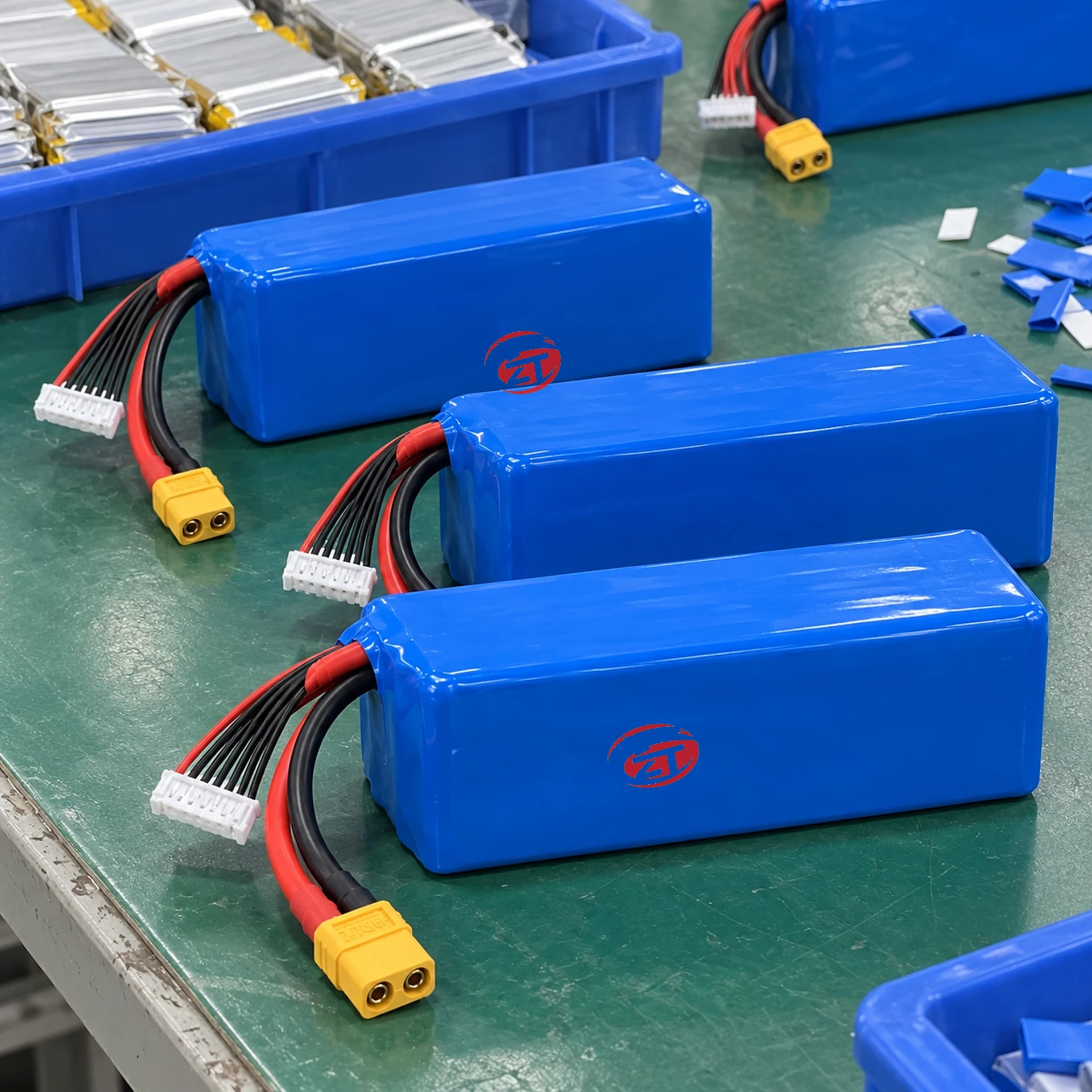
An FPV battery needs to fit the aircraft mechanically and electrically while supporting the intended flying task. Capacity alone cannot answer whether a pack is suitable for racing, filming or another mission. The most useful shortlist starts with the platform’s voltage requirements, installed mass limit, mounting arrangement and measured power demand.
Define the aircraft configuration before comparing packs
Record the frame, motors, propellers, electronic speed controllers and any payload. Confirm the permitted voltage range with the responsible platform documentation. A battery’s series count is important, but it does not by itself establish maximum charge voltage or compatibility across different cell types.
Specify the purpose of the flight. A buyer prioritizing a short high-power task may make a different trade-off from one prioritizing steady operation with a camera payload. Avoid asking for the best FPV battery without identifying the task and the limits that matter.
Measure the installed envelope
Battery-body dimensions are only part of the space requirement. The installation also includes leads, connector engagement, retention and service access. Measure the space available with the intended equipment installed, not an empty frame.
| Fit item | What to record | Typical review question |
|---|---|---|
| Battery body | Maximum permitted length, width and height, including tolerances | Does the approved pack drawing fit? |
| Leads and plug | Exit direction, route and connection clearance | Can it connect without tension or interference? |
| Retention | Approved strap or mounting arrangement | Is the pack retained without damaging it? |
| Installed mass | Battery plus required adapter or hardware | Does the aircraft remain within its limits? |
| Position | Permitted location and balance considerations | Does it interfere with the payload or airframe? |
| Inspection access | Visibility and removal method | Can the pack be checked and replaced correctly? |
Keep the drawing and photographs together. A photo can show the proposed location, while dimensions and tolerances define what is actually being approved. Do not force a pouch pack into a space by bending its seal or tabs. Gens ace and Tattu’s LiPo handling guidance explains the importance of protecting these areas.
Review power demand separately from runtime
Ask for normal operating current and short peaks, including their duration and repetition. Check the whole battery assembly rather than assuming that a cell’s rating applies unchanged to cables and connectors. For a procurement review, the selected pack’s approved discharge specification is more useful than a large C-number without conditions.
Voltage behaviour under load also matters. A pack may contain sufficient nominal energy but still be unsuitable if the aircraft reaches its minimum input threshold during a demanding event. Agree how the platform team will evaluate this behaviour using appropriate equipment and controlled procedures.
Compare useful energy against added mass
Increasing capacity can increase the energy available, but the aircraft must also carry the battery. This makes mass and propulsion demand part of the same decision. Tyto Robotics’ drone battery guide discusses the capacity, weight and discharge trade-offs faced in drone selection.
Do not transfer a reported flight time from another aircraft into your quotation. Instead, ask for results or estimates tied to the intended configuration and mission. If an estimate is necessary, state the assumed usable energy, average power and reserve. A precise-looking number without these inputs is not a reliable comparison.
Include charging and turnaround
Confirm the charging specification and all charging interfaces. The number of packs needed for a working day may depend on charging time, cooling requirements, inspection and the available charging equipment. A larger pack is not automatically a better operational choice if it makes the required turnaround impractical.
Agree how batteries will be identified so test records and service history remain linked to the correct units. Ask what changes would require approval again, especially a different cell, connector, cable length or mechanical arrangement.
Shortlist first, then evaluate the sample
Use the table above to remove models that cannot meet the basic fit or electrical constraints. For the remaining candidates, agree a sample evaluation with the aircraft team. Record the actual configuration and conditions and distinguish bench measurements from flight observations.
The 6S 4200mAh FPV battery and 6S 8000mAh FPV battery are product listings for further review, not a statement that both suit the same aircraft. Browse Drone Batteries and send the platform details to start a focused quotation.
Buyer question: Should I choose the largest pack that fits?
Not necessarily. Mechanical fit is one condition. Installed mass, power capability, voltage behaviour, mission duration and charging logistics all contribute to whether the pack is a useful choice.
Explore battery selection resources · Discuss your configuration