 NEW JOURNEY


Product Description
The 25.6V 60Ah AGV Battery is an option where the route energy budget does not require the larger 100Ah reserve. Capacity selection should include waiting time, traction and auxiliary loads, plus the energy restored during dock visits. The 29.2V upper-charge value is a reference for the 8S platform. The approved BMS and charger profile define the operating settings.
Route Energy
A 60Ah AGV lithium battery suits space-conscious vehicles and fleets using planned or opportunity charging. Consider 100Ah when longer intervals between charges justify more size and mass. This makes the 60Ah platform particularly relevant to compact AGVs that operate predictable routes and can access planned charging windows. Buyers should compare not only nominal runtime but also the space, mass and service advantages gained by staying with a smaller battery. When the route has longer uninterrupted work periods or fewer charging opportunities, the 100Ah alternative becomes more attractive even though it requires more room and allowable mass.
Technical Specifications
| Parameter | Source Reference Configuration / Project Confirmation |
|---|---|
| Market Voltage Class | 24V-class |
| Nominal Voltage | 25.6V |
| Configuration | 8S LiFePO4 |
| Capacity | 60Ah |
| Nominal Energy | 1.536kWh |
| Upper Charge Reference | 29.2V (8 × 3.65V); final charger profile project-confirmed |
| Charge Method | CC-CV; manual / dock / opportunity charging by project |
| Continuous / Peak Current | Project-confirmed from AGV load and peak duration |
| Communication | CAN / RS485 project-selectable; mapping confirmed by project |
| Enclosure / Weight | Dimensions and weight are not specified in the available source. Confirm both against the approved configuration drawing before ordering. |
| Connector / Pinout | Project-configured |
Product Details

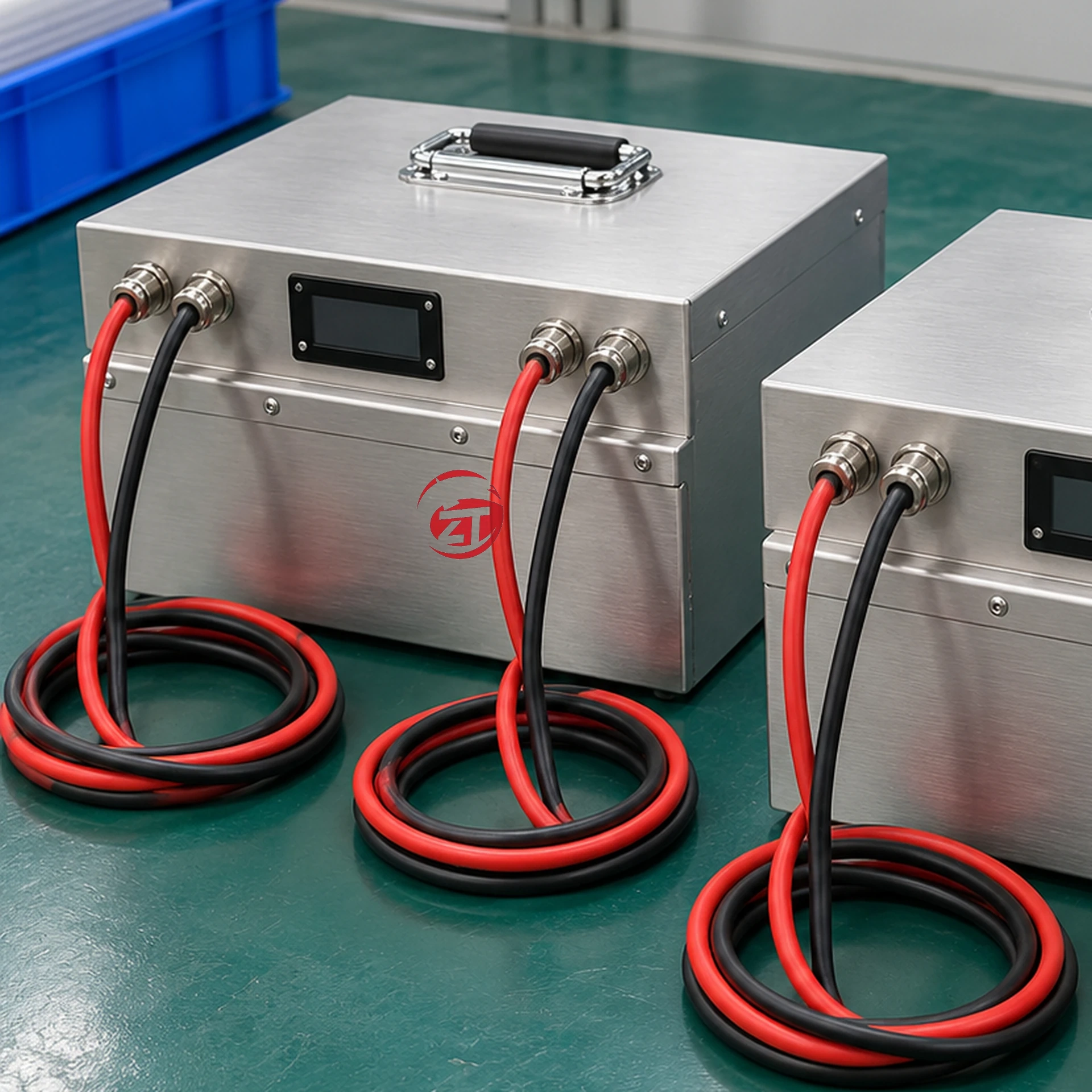
Replacement Specification
A 24V 60Ah AGV replacement battery should not be approved from the label alone. For this 25.6V 60Ah AGV Battery, confirm the 8S route, bay fit, charger, connector and communication. Replacement approval should combine the existing battery label with evidence from the AGV, charger and battery bay. A correct replacement maintains the voltage architecture, fits the physical space, uses the required connector and reproduces the communication behavior expected by the vehicle. By documenting these items before sample release, New Journey can give distributors and fleet operators a clearer basis for repeat orders and after-sales support.
Check the battery access route
Assess how the pack is inserted, retained and removed for service. Agree the charge interface and polarity with the robot integrator, then retain the dimensions, capacity and voltage checks against the approved assembly.
Production and Handling Context

Discuss the Sample and Order
Send AGV load data, charger specification and connector or protocol details to New Journey for a 25.6V 60Ah AGV Battery quotation.
Compare 25.6V 60Ah AGV Battery with related models
| Selection point | 25.6V 60Ah AGV Battery | 25.6V 100Ah AGV Battery | 48V 60Ah AMR Battery |
|---|---|---|---|
| Nominal Voltage | 25.6V | 25.6V | 48.0V |
| Capacity | 60Ah | 100Ah | 60Ah |
FAQ
What should I compare before selecting 25.6V 60Ah AGV Battery?
capacity: 60Ah for this model, compared with 100Ah for 25.6V 100Ah AGV Battery.
Can I reuse a charger with this battery?
Upper Charge Reference: 29.2V (8 × 3.65V); final charger profile project-confirmed. Match the charger profile, polarity and connection to the ordered assembly. A voltage-class label alone does not establish compatibility with an existing charger.
Can the 60Ah version be selected by capacity alone?
Capacity does not establish whether it fits the AGV. The available source does not specify the enclosure dimensions or weight; compare the available space, mounting arrangement and connector access before ordering.
Does the listed communication interface make this battery plug-and-play with my robot?
For the 25.6V 60Ah AGV Battery, the interface entry is Communication: CAN / RS485 project-selectable; mapping confirmed by project. The connector pinout, message IDs, data scaling and charging handshake must match the robot controller. Supplying the same physical bus does not by itself establish protocol compatibility.