 NEW JOURNEY
High-Energy-Density UAV Batteries: Applications and Customization
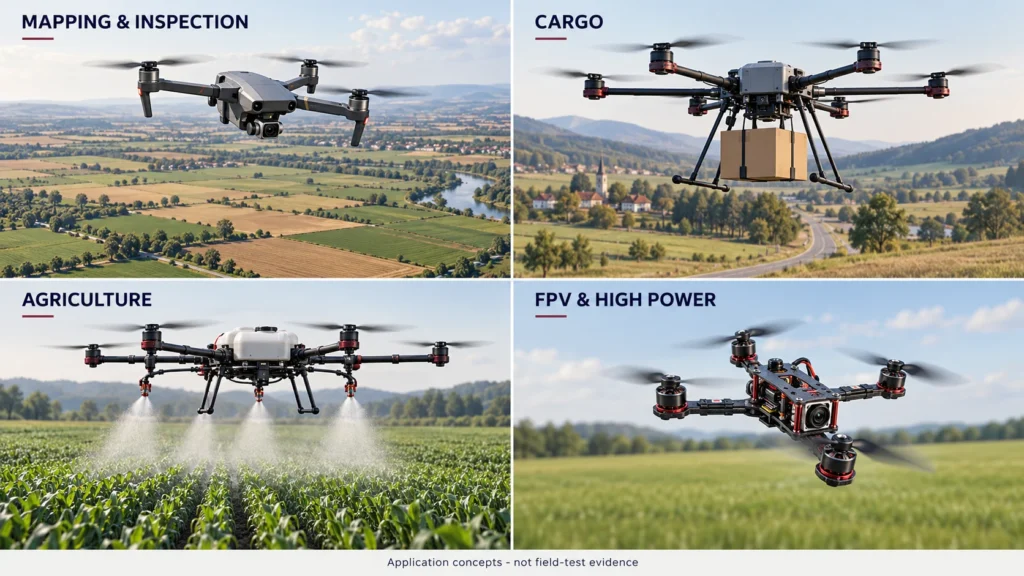
A battery upgrade should serve a clear purpose: complete a longer mapping route, give an inspection camera more time on the asset, or balance a delivery payload with the energy needed for its journey. High-energy-density cells provide a starting point for these design goals. The next step is to build the battery around the aircraft and the way it works.
Xiamen New Journey Technology Co., Ltd. provides customer-specific battery development and configuration support. We work with customers to connect cell selection, voltage, capacity, packaging and interfaces to the priorities of their UAV project.
Choose the benefit that matters to your aircraft
Higher cell specific energy can provide more energy within a given cell-mass allowance, or reduce cell mass for a given energy requirement. Higher volumetric energy density can help a design fit more energy into limited cell space. These options give a project team flexibility to prioritize endurance, payload or a compact installation.
For a weight-sensitive aircraft, begin with the cell’s Wh/kg specification. For a restricted battery compartment, include Wh/L and the cell dimensions. We treat the corresponding cell specification as the cell reference, then address leads, heat-shrink film, connections and installation allowance as separate pack-design items.
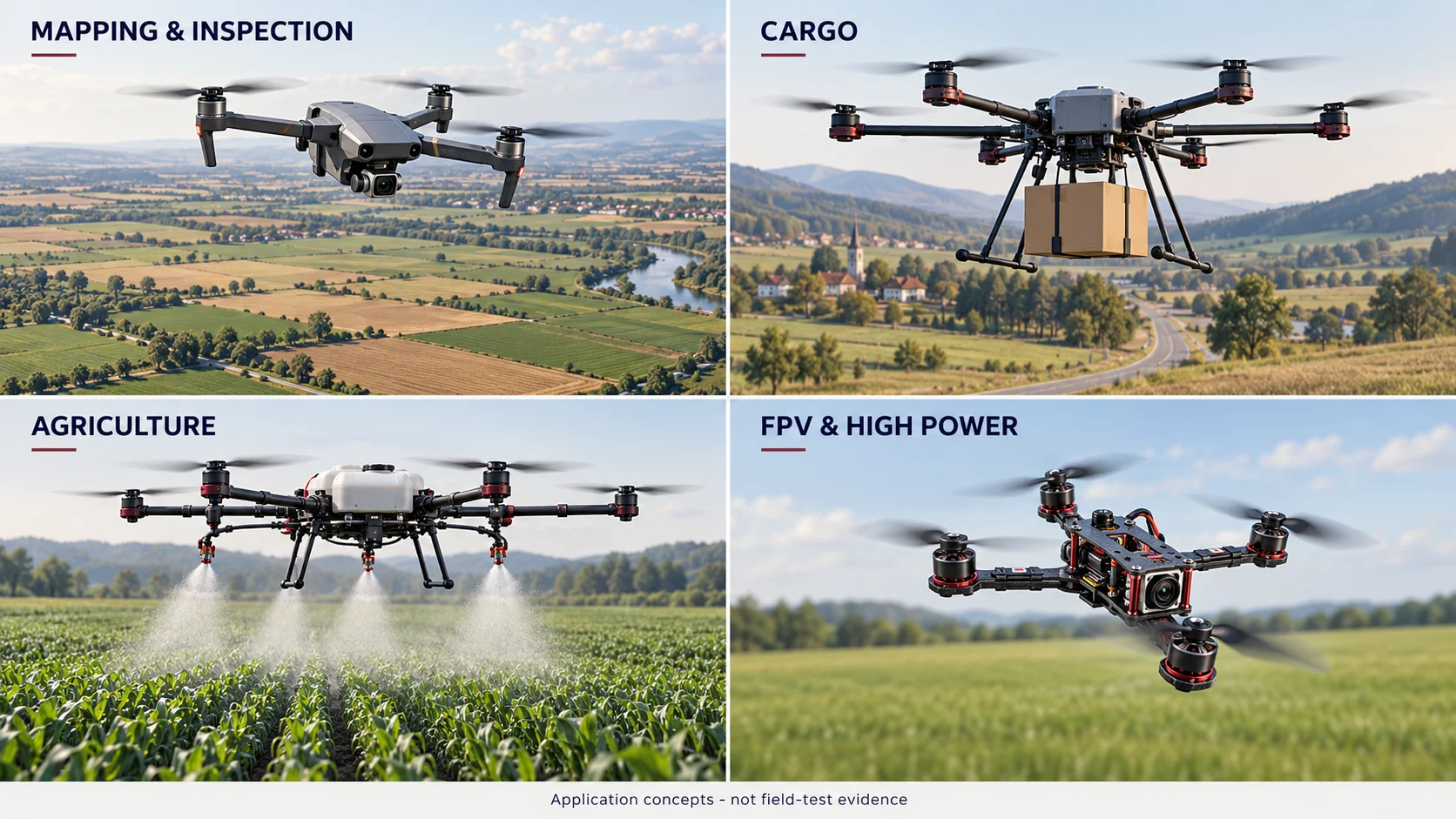
Surveying and mapping: keep the route productive
A survey mission combines route coverage, image overlap, sensor weight and the need to return with an appropriate reserve. Where battery energy is the constraint, a higher-specific-energy cell is a candidate for extending the useful portion of the sortie or reducing the cell mass needed for the existing route.
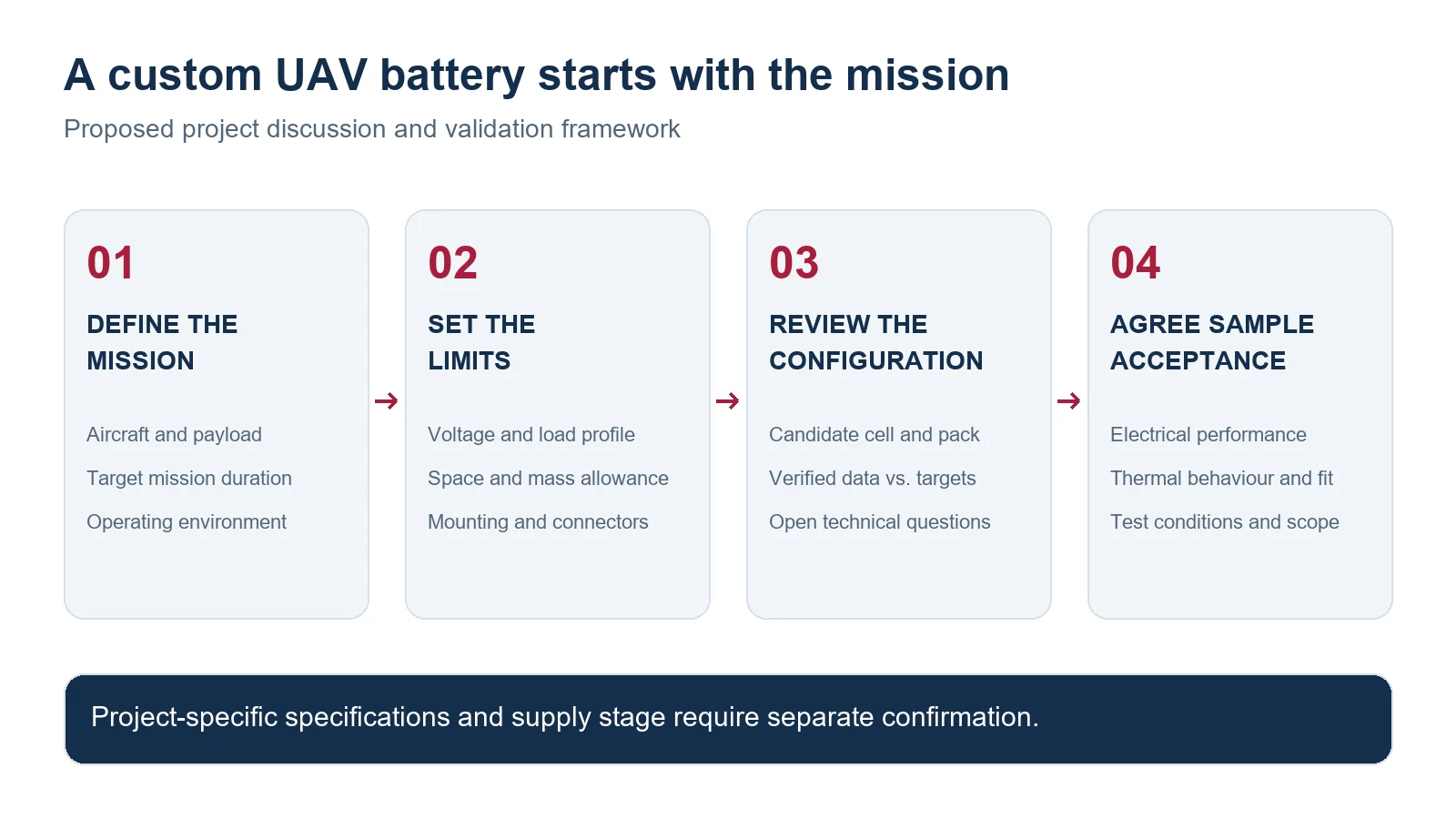
For a custom proposal, share the planned flight profile, camera or LiDAR mass, battery-weight limit and target operating time. The battery configuration can then be considered alongside the aircraft’s cruise demand and available compartment, rather than adding capacity without regard to the airframe.
Inspection: allow more time for useful observation
Power lines, solar sites, bridges and other infrastructure involve different combinations of transit, hover and repeated repositioning. Optical and thermal payloads add their own weight and electrical needs. A useful battery design considers how energy is spent during the full inspection, including the journey back.
New Journey can discuss cell selection, capacity and packaging around those requirements. Continuous output, short-duration demand and operating temperature remain part of the configuration, so the design supports the inspection task as well as the endurance target.
Cargo and logistics: balance payload with route energy
In civilian delivery projects, cell mass and stored energy influence how the aircraft’s weight allowance is allocated. A lighter cell solution at the required energy may create design flexibility; additional stored energy at the same cell mass may instead support a longer mission objective.
The right choice depends on take-off demand, cargo mass, route and reserve requirements. Share the loaded and unloaded operating profiles, maximum battery dimensions and permitted aircraft mass. This lets the project discussion focus on a workable payload–energy balance within the aircraft’s limits.
Agriculture and repeated field work: consider the whole work cycle
Field operations can involve substantial output, repeated flights and time-sensitive charging or battery exchange. Higher density is useful when it contributes to the working cycle, while sustained current capability, temperature behaviour and charging turnaround help determine how the battery will be used through the day.
For these applications, we discuss the loaded duty cycle, charging equipment, battery-exchange arrangement and expected daily use together. The aim is a configuration that fits the operating workflow, including the time between flights.
Compact and recreational FPV aircraft: use space and mass well
A compact airframe may have little room to change its battery layout. Cell dimensions, arrangement, lead direction and connector access can be as important as the energy target. For recreational FPV, transient output and voltage response also affect the suitability of the selected cell.
Send the available space and the aircraft’s electrical requirements so we can discuss a configuration that balances useful energy, weight and output. The highest-density candidate is not automatically the best choice when the task places a stronger demand on power delivery.
What New Journey can help configure
| Your priority | Configuration discussion | Helpful starting information |
|---|---|---|
| Longer mission or lower battery weight | Cell selection, capacity and series/parallel arrangement | Voltage range, payload, load profile and operating-time target |
| Fit an existing airframe | Cell layout, pack dimensions, wrapping and lead exit | Compartment drawing, mounting method and available clearance |
| Match the electrical interface | Main connector, wire arrangement, balance interface and any monitoring requirements | Current demand, mating connector, charger and requested signals |
| Move toward sample evaluation | Proposed configuration, sample scope and acceptance requirements | Quantity, timing, destination and evaluation priorities |
The existing 12S 16000mAh 25C UAV Battery and 8S 40000mAh UAV Battery offer catalogue starting points for configuration discussions. Choose the platform that fits the aircraft’s voltage requirements, then review the model’s specifications and interfaces.
A direct conversation with New Journey
Based in Xiamen, Fujian, China, New Journey’s product scope includes drone batteries, motive power batteries, embedded battery packs and cells. Our Alibaba supplier profile also lists customization options for size, packaging, labels, logos and colour.
We support battery development discussions, product selection, sample coordination and commercial follow-up. Start with the application problem you want to solve; the cell choice and pack configuration should follow that goal.
Tell us what your next UAV battery needs to achieve
Send your aircraft voltage range, target operating time, load or payload, available battery space and expected quantity. If you already have a preferred high-density cell, include its specification so we can discuss the configuration around it.
Download the short UAV project brief or start a custom battery inquiry. Contact Yi Zhencheng, Manager: nwoty6666@gmail.com · +86 135 9998 6238.
Application benefits described here are design objectives. Achievable endurance, payload and charging performance depend on the selected cell, battery configuration, aircraft and operating conditions.
For the technology background, read IEEE 4333-2026 and the opportunities for high-energy-density UAV cells.